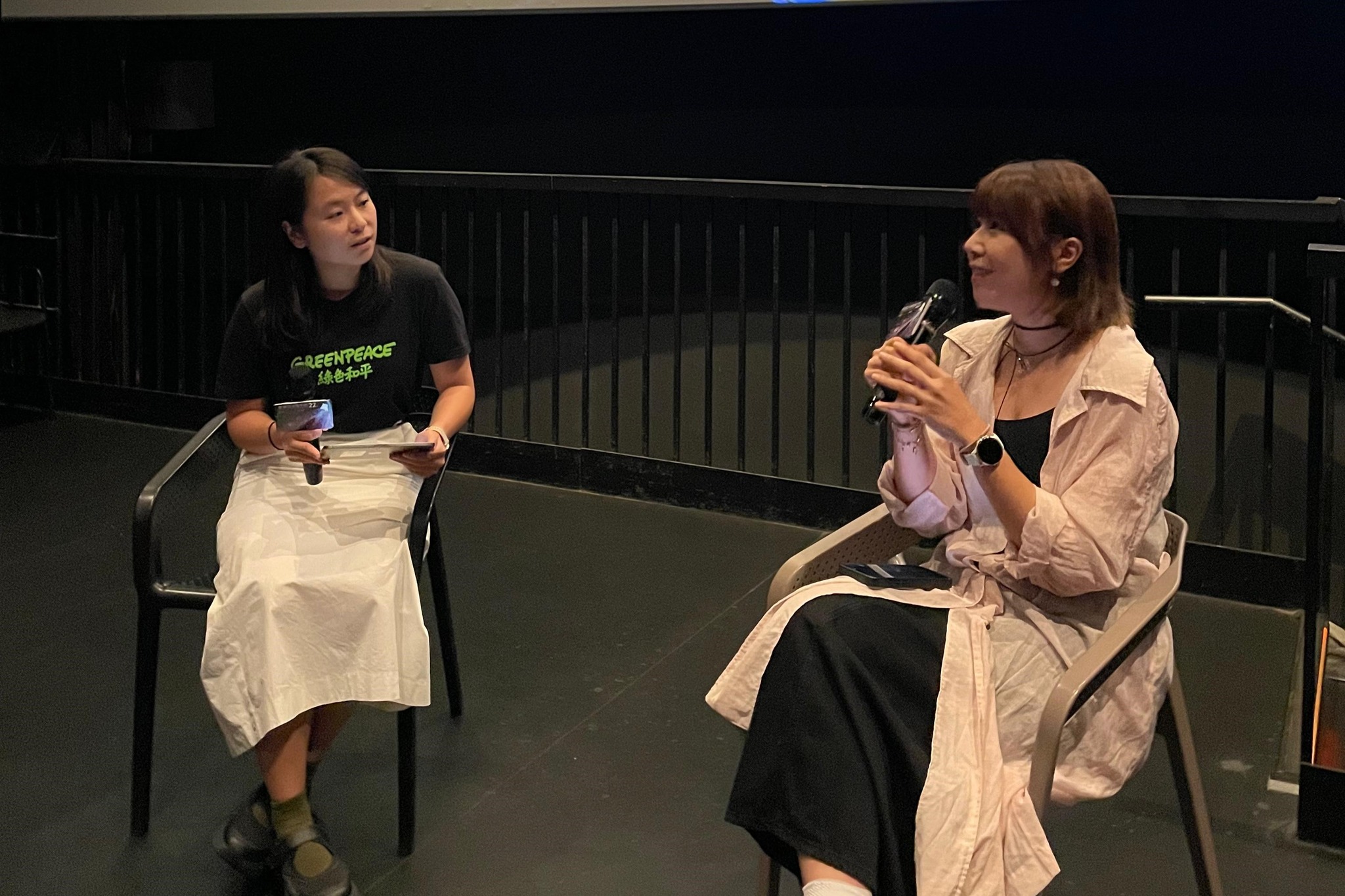
Hong Kong Asian Film Festival teamed up with Greenpeace Hong Kong, presenting documentary Newtopia on 2nd November. We were delighted to have Phoebe from MiLL MILK to share with us her experience in Amazon forest after the screening. The event allowed audience to reflect upon the relationship between human and nature.
Newtopia is directed by Norwegian traveller Audun Amundsen. Spending 15 years to navigate every corner of tropical forests in Indonesia, he chronicled the changes in the life of indigenous tribes. These indigenous people have lived for generations by hunting, picking fruits, and practising shamanism. They coexist with mother nature and have their unique cultures and religions. However, with the advance of capitalism and modern technology, their living habitats have been gradually altered, as primeval forests are replaced by concrete jungles.
During the post-screening discussion, Phoebe shared her experiences in the Amazon rainforest, which resonated with the film. She visited indigenous communities, participated in shamanic rituals, had the chance to closely observe the daily life of indigenous people and witnessed the impact of climate change on local ecosystems. She shared that the scene in which indigenous people access the internet to practise traditional songs strike her the most. Despite having only one or two hours of network connection daily, they utilised these limited resources to download music, practise drums or guitars, preserving tribal traditions. This embodied the marriage of technology and heritage. Phoebe also referenced a scene where an indigenous man purchased a wig. Having cut his long hair, a symbol of his identity, to secure employment in urban city and avoid discrimination or misunderstanding, he chose to wear the wig upon returning to his tribe, reclaiming his sense of self. This nuanced detail profoundly moved her.
Phoebe further noted that during her interactions with Indigenous communities, she realised that they had no awareness of concepts like "global warming". Yet, upon her explanation, they immediately connected these ideas to phenomena like receding rivers and dwindling fish stocks, consequences they endure daily. Furthermore, Phoebe shared that as she entered tribes deep within the Amazon rainforest, rivers that should have reached chest height was now nothing but sandbanks and rocks, shallow enough to walk across. Children even played on the sandy shores as if it was a desert. Boats frequently ran aground, forcing boatmen to wade in and push the boat along, stretching a two-hour journey to five. Rising water temperatures also resulted in fish already cooked when caught. Climate anomalies also led to extreme temperature swings. During her August visit to the Amazon, typically the hottest season, she experienced a sudden cold snap from 40°C to 18°C. Locals noted climate patterns had shifted.
Phoebe acknowledged that indigenous tribes still grapple with patriarchal structures and gender inequality. Men are responsible for hunting, while women manage household duties. Some tribes practise polygamy, even marrying entire families of sisters, alongside issues of domestic and sexual violence. Furthermore, drug problems stemming from colonial history continue to impact these communities. Some individuals developed addictions when colonisers paid wages in narcotics, yet remain unaware of the harm caused.
As the event drew to a close, Phoebe shared a life philosophy she learned in the Amazon, go with the flow. Indigenous peoples do not judge things as either good or bad. When it rains and their clothes get wet, they do not complain but simply accept it; when a boat journey is delayed, they do not grow impatient but wait quietly. This attitude towards life made her reflect on the anxieties and worries of city dwellers. Phoebe believes that if we could adopt a more primal perspective, life would perhaps be happier.
Greenpeace concluded by urging the audience to remain vigilant on forest conservation issues. They invited attendees to participate in future screenings and advocacy campaigns, while also encouraging everyday actions—choosing more sustainable consumption practices to speak up for the forests.


